
Launched in December 2018, San Diego Tech Hub was created to bring together IT professionals across the region. Stylers Group founder Peter Tiszavolgyi was one of the people involved from the very beginning. In this interview, he reflects on the community’s early growth, its mission, and the role it set out to play in the local tech ecosystem.

Can you tell us how San Diego Tech Hub got started? Why did you want to be part of it?
One important part of the story is that, in the northern part of San Diego, there had not really been a larger tech community that brought everyone together. There were smaller groups, but nothing that truly connected the wider local ecosystem.
Part of the reason was the region’s rapid growth in tech over the previous few years. A number of companies had either moved into the area or opened offices there, and many people felt the lack of a stronger local community. We noticed it too, since we often had to travel farther north to other cities if we wanted to attend meetups.
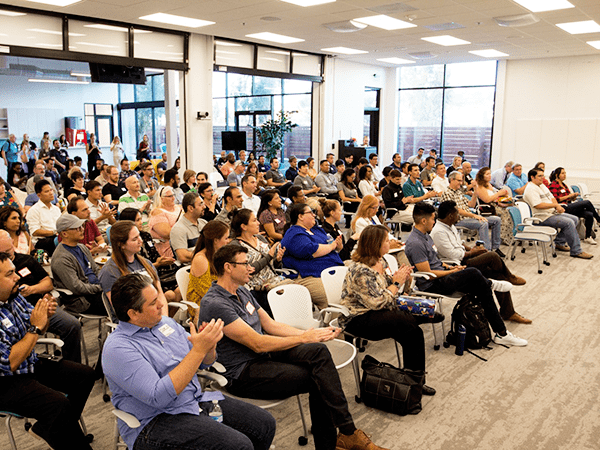
The idea for San Diego Tech Hub originally came from Claude Jones. In December 2018, during a meeting, he raised the idea of starting a local tech community. At that first gathering, there were only around 20 people in the room. After that, growth came quickly, and within a year the community had grown to nearly 3,000 active members.
I got involved in the organization from the very beginning because I strongly identified with the direction behind the initiative. I really liked the idea of building a supportive IT community where people help each other, and where it does not matter where you come from, what nationality you are, or exactly what role you have. What matters is being a good person, sharing what you know, and helping others when you can.
What was it like to see the community grow so quickly?
It was exciting to see how quickly things developed.
Our regular monthly Tech Hub meetings were already drawing more than 200 participants, and our Tech Talks events also attracted strong attendance. It was a very tangible sign that the community was growing and that there was real demand for a local tech network that could bring together like-minded people.
What made it especially rewarding was the sense that we were building something genuinely useful. People wanted this kind of community, and they were ready to take part in it.

Was there a broader mission behind San Diego Tech Hub that stood out to you?
I think different people may have connected to it in slightly different ways, but overall the main goal was clear: helping each other move forward.
There is a saying I like very much: “a rising tide lifts all boats.” That idea captured the spirit of the community well. If we support each other and create better opportunities together, the result is not only better for individuals, but better for the local ecosystem as a whole.
That was one of the core missions of San Diego Tech Hub: to help local people, companies, and groups grow by encouraging collaboration and strengthening connections within the community.
There was also a strong social good dimension to the initiative. We wanted to support people who were in more disadvantaged situations for one reason or another. For example, we saw that many middle-aged and older workers were losing jobs as automation changed the nature of work. At the same time, new opportunities were emerging in administration, operations, and data-related roles. One of the ways we tried to help was by organizing adult learning opportunities that could support people in building new skills.
For younger people, we launched tech-focused programs where they could learn development and related skills. We also ran initiatives for job seekers, startups, and small businesses, including free consultations for those who needed guidance. One of our programs for teenagers invited them to create their own imaginary startup, present how it would work, write a one-pager, and explain how they would communicate with investors.
At the heart of all of these programs was the same goal: to build an inclusive, supportive tech community where people could turn for help, advice, and opportunity. And from what I saw, that was already happening.
What was your role within San Diego Tech Hub?
I was one of the founding members. At the time, there were six of us in the leadership team, and my main area was technology advisory.
That meant helping ensure we used the right technology solutions for things like the website, infrastructure, and data management, while also contributing to the more technical direction of some of our events.
But in practice, in a young initiative like this, responsibilities were not sharply separated. All six of us were involved in a bit of everything, and one of our biggest shared responsibilities was keeping the community connected and moving in the right direction.
Fortunately, that part came naturally, because the community itself was strong. Many people reached out asking how they could help, so in many cases the bigger challenge was not finding support, but figuring out how to involve as many people as possible in meaningful ways.
I saw on the website that you worked with a lot of volunteers. How did that work in practice?
A good example is event organization. Many people contributed their own time and resources to support programs in different ways.
Our Open Source Saturday event is a great example of how self-organizing the community became. During one of our regular Tech Hub meetings, a participant offered the use of a maker lab they operated as the venue for the event. By the next day, the first session was already taking place, and from then on it continued as a weekly program for months.
That says a lot about how this community worked. People did not just attend. They actively contributed.
Mentorship Connect was a more structured version of that same spirit. Volunteers could sign up if they had knowledge they wanted to share and a bit of time available, even as little as a couple of hours per week. We then connected them with people who were looking for mentorship in specific areas. In many cases, that support could even work both ways.
Were there areas where the organization itself had started to improve?
Yes, definitely. One clear area was how much more structured our regular events became over time.
In the earlier phase, monthly meetings were more like status updates where we shared what had been happening within the Tech Hub. Later, we started planning much more intentionally. We mapped out themes in advance, shaped a clearer annual program, and gave each month a stronger focus.
That meant regular updates remained part of the format, but we also built in more substantial themes, talks, smaller workshops, and networking opportunities. We wanted the events to be more useful, more engaging, and more consistent for attendees.
For us as organizers, one of the ongoing priorities was still making sure these programs reached the right audiences and that we found sponsors who could help support the community’s continued growth and sustainability.